Interview with Mgr. Monika Volejníková,
Head of the Laboratory
Social freezing is a modern way of planning parenthood. It is a method in which women and men have their reproductive cells frozen in order to preserve their fertility for the future. It allows them to postpone parenthood until a time when they feel better prepared for it – whether for personal, relationship or professional reasons.
Egg cryopreservation is a laboratory method that allows eggs to be safely frozen and stored long term for later use. It is recommended before planned treatment that could affect fertility, before surgical procedures involving the ovaries, and also as part of future family planning, known as social freezing.
The whole process begins with hormonal stimulation of the woman’s ovaries, which allows several eggs to mature at the same time. This is followed by egg retrieval under short general anaesthesia. In the laboratory, mature eggs are then selected and frozen using the method of vitrification.
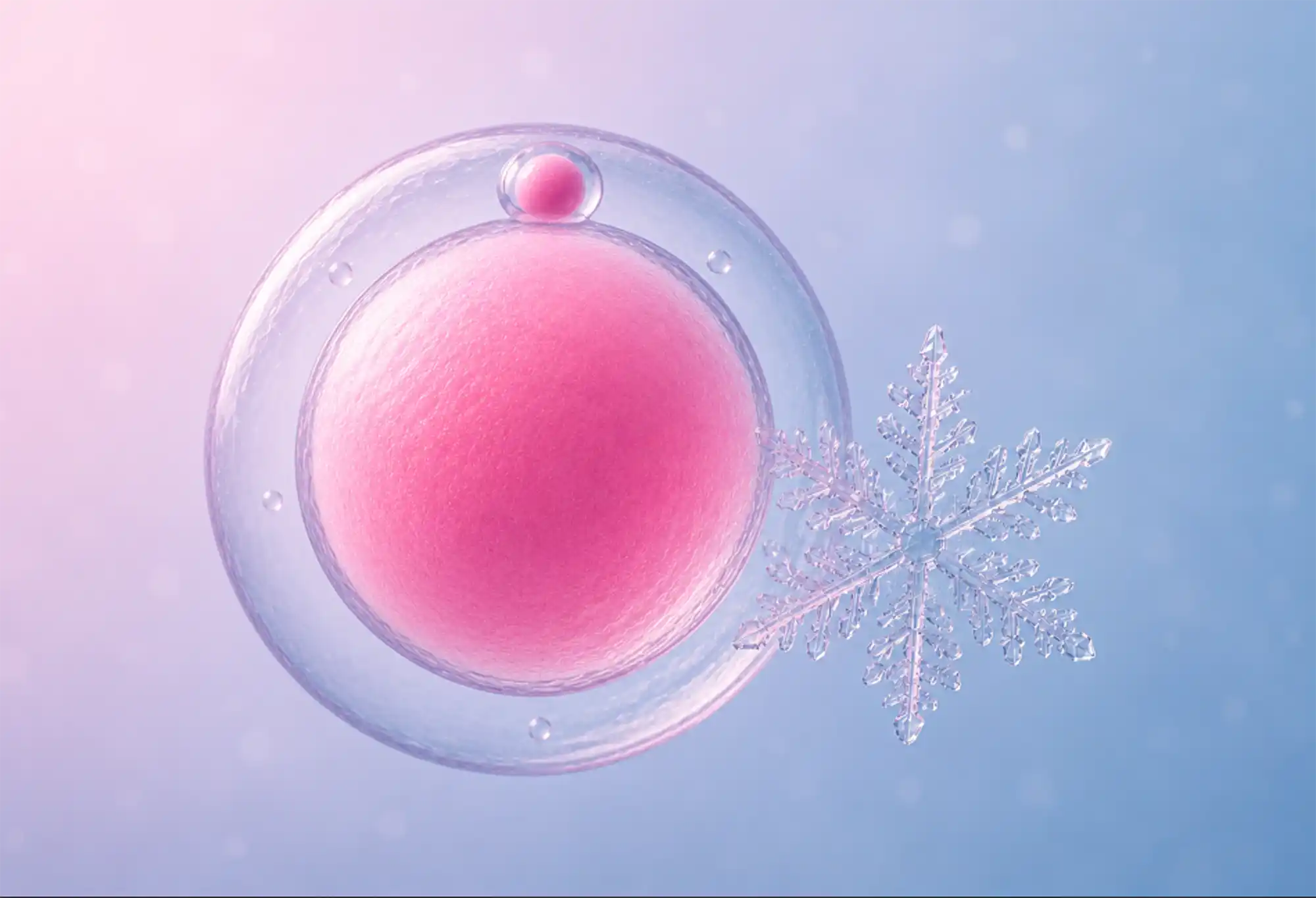
The principle of vitrification is the very rapid freezing of eggs without the formation of ice crystals. The cell enters a so-called glass-like state, which protects its internal structure from damage. This procedure increases the likelihood that the eggs will retain their quality after thawing.
The eggs are stored in a cryobank in liquid nitrogen at a temperature of −196 °C, where they can remain stored for many years. If needed, they are carefully thawed, fertilised using the ICSI method and then cultured as embryos. Oocyte cryopreservation using vitrification therefore gives women the opportunity to preserve their fertility and increase the chance of having their own child in the future.
From a biological perspective, the ideal age for egg freezing is approximately between 28 and 35 years. The period around the ages of 30 to 33 is considered the most suitable, when eggs still have very good quality and the ability to continue developing after fertilisation. After the age of 35, both their quality and number decline more markedly and the risk of genetic changes increases, which may reduce the chance of a successful pregnancy.
For a realistic chance of a future pregnancy, it is recommended to have approximately 15 to 20 eggs frozen.
The main benefit is the ability to plan parenthood according to one’s own life situation and use frozen eggs when the conditions for pregnancy are most suitable. Another advantage is preserving the quality of eggs from a younger age, which may increase the chance of pregnancy even when the probability of natural conception is already considerably lower, for example after the age of 40.
Yes. Sperm cryopreservation allows sperm to be safely frozen and stored long term for later use. It is recommended before planned treatment that could affect fertility, before certain surgical procedures, as part of infertility treatment, and also when planning parenthood for the future, as part of social freezing.
After collection, sperm are processed and then gently frozen and stored in liquid nitrogen at a temperature of −196 °C. Modern methods using protective, cryoprotective solutions make it possible to preserve sperm quality and functionality even after very long periods of storage, for example decades. Sperm stored in this way can be used at any time in the future as part of assisted reproduction methods, providing greater certainty and flexibility in family planning.
There are several such situations, but the most common include:
In men, sperm quality does not decline with age as sharply as it does in women. Nevertheless, semen analysis parameters gradually worsen, including concentration, motility and morphology, and the risk of damage to genetic information, known as DNA fragmentation, increases.
Sperm freezing can therefore serve as a kind of safeguard, allowing sperm to be preserved at a time when they are of the best quality and used later when planning a family, regardless of possible changes in quality or health status.
There is no precisely defined ideal age for sperm freezing, but it is recommended to consider this step in younger adulthood, approximately between the ages of 20 and 35, when sperm quality is usually at its highest. However, the suitable period may extend up to the age of 40.
In general, the earlier sperm are frozen, the higher the probability that they will retain optimal quality for future use.
Book a consultation at our ReproGenesis clinic. Our team of specialists will recommend the most suitable procedure and help you plan for the future.
Contact us to find out more about social freezing options.

Hlinky 144, 603 00 Brno, CZ