Microfluidic sperm separation (MSS) is a modern and gentle method of sperm selection using a special chip that mimics the natural barriers in the female body. This makes it possible to obtain sperm with the best prerequisites for successful fertilisation of eggs and healthy embryo development for assisted reproduction.
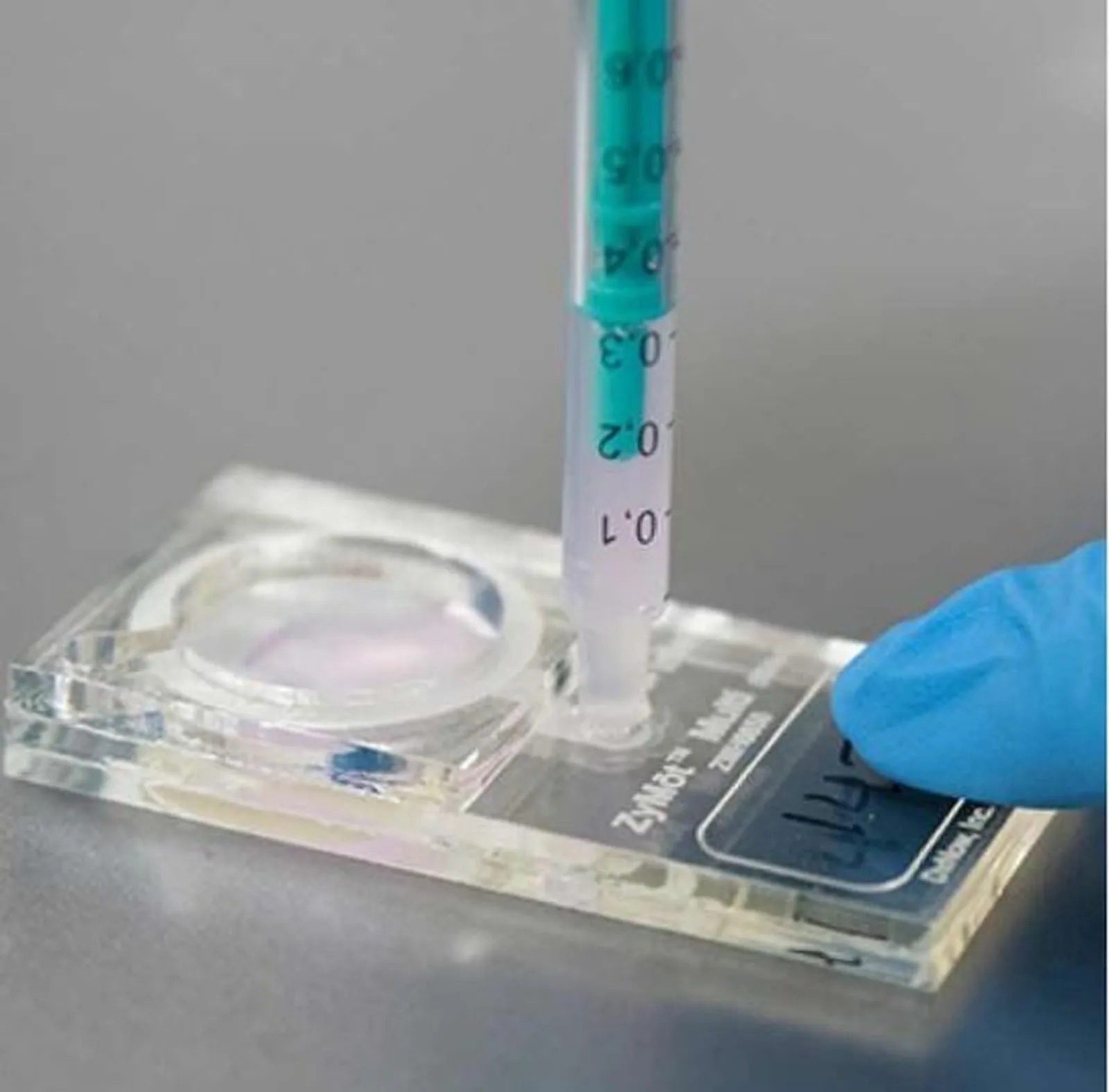
Microfluidic sperm separation is an advanced method of sperm processing for assisted reproduction techniques. It is used to select the highest-quality sperm in a special chip with a microporous membrane.
The passage of sperm through the chip mimics their journey through the female reproductive tract, naturally separating genetically and morphologically high-quality, motile sperm from lower-quality sperm.
A microfluidic chip is a single-use device with a fine network of microscopic channels through which sperm pass solely by their own active movement. Sperm selection therefore takes place in a gentle and natural way, without mechanical interventions such as centrifugation or other previous sample processing that could damage the sperm.
A semen sample is applied to the inlet part of the chip, while only sperm with the following characteristics are collected at the outlet:
Sperm with low motility, damaged DNA or signs of cellular (oxidative) stress are unable to pass through the channels and remain trapped in them.
in cases of increased sperm DNA fragmentation
in cases of poor sperm morphology
after recurrent miscarriages
in cases of poor embryo quality in a previous IVF cycle
if there was a low fertilisation rate of eggs in a previous IVF cycle
Microfluidic sperm separation is a gentle and effective sperm selection method that mimics the natural selection process in the female body. It helps select sperm with the highest potential for fertilisation and healthy embryo development. Compared with standard laboratory processing, it may increase the chance of pregnancy by up to 25% and at the same time reduce the risk of miscarriage.
Microfluidic chips are suitable not only for IVF treatment with egg retrieval, but also for preparing sperm for intrauterine insemination (IUI), where they help obtain a sample with better prerequisites for successful fertilisation.
Hlinky 144, 603 00 Brno, CZ