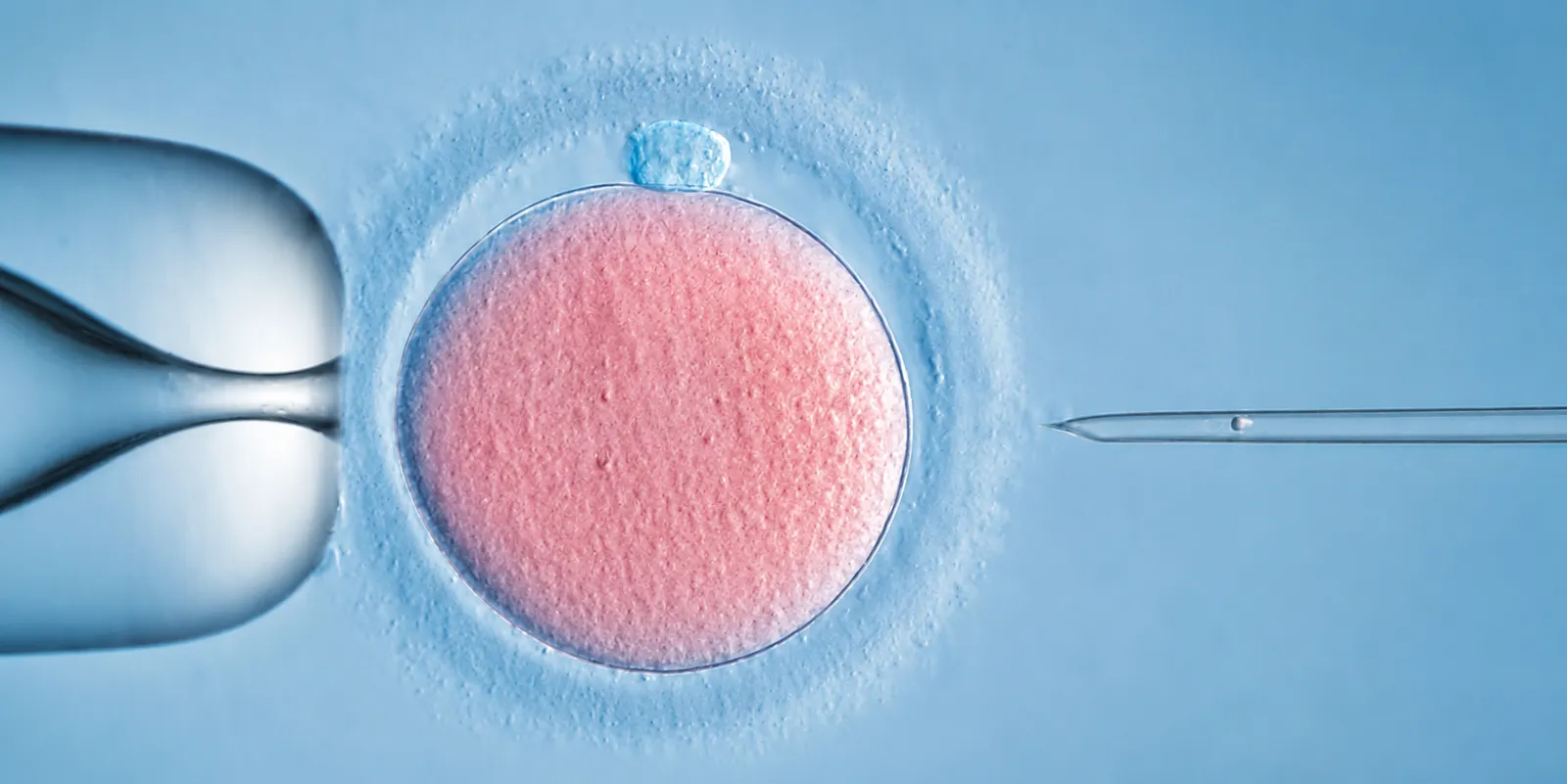
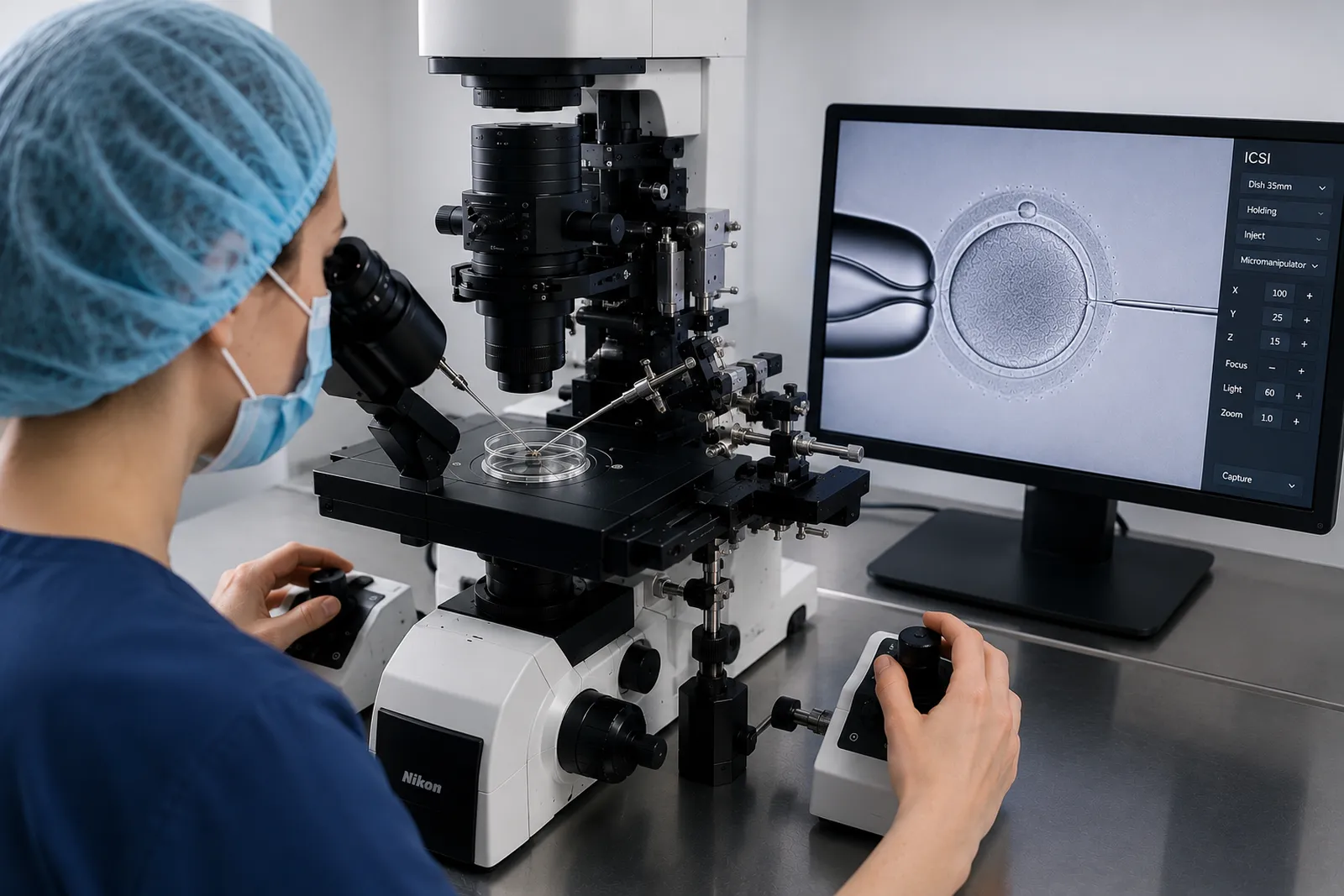
Intracytoplasmic sperm injection (ICSI) is an assisted reproduction method in which an embryologist injects one high-quality sperm directly into the egg. This significantly increases the chance of successful fertilisation, especially in cases where semen analysis results are outside the recommended values.
The ICSI method is a micromanipulation technique in which an embryologist selects motile sperm without obvious morphological, or shape-related, defects. The selected sperm is then immobilised and injected into the centre of a mature egg at the MII stage.
This method represents a highly effective way of achieving fertilisation, even in severe forms of male infertility. It also helps overcome certain immunological barriers between the sperm and the egg and minimises the risk of polyspermy, meaning the penetration of more than one sperm into the egg.
Unlike conventional IVF, or in vitro fertilisation, where processed sperm are added directly to the eggs in a culture dish and fertilisation occurs "naturally", the fertilisation process in ICSI is precisely controlled by the embryologist.
To increase the success rate of fertilisation, we also use modern sperm selection methods, such as microfluidic chips (MSS) and the MACS method. These technologies make it possible to obtain mature, viable and genetically high-quality sperm for ICSI, while also removing sperm that are damaged, degenerating or have impaired, meaning fragmented, DNA. The result is a reduced risk of genetic defects and support for healthy embryo development from its very beginning.
Ensures a high success rate of egg fertilisation, meaning the formation of an embryo with maternal and paternal pronuclei, known as 2PN.
Enables the selection of high-quality sperm for fertilisation.
Significantly increases the chance of fertilisation even in cases of a low sperm count, reduced sperm motility or poorer morphology, meaning shape.
Is necessary when preimplantation genetic testing of embryos (PGT) is planned.
Reduces the risk of fertilisation failure caused by immunological or other barriers between the egg and the sperm.
The abbreviation comes from the English term Intracytoplasmic Sperm Injection, meaning the direct injection of a sperm into the cytoplasm of the egg.
We use the ICSI method as standard for all couples undergoing assisted reproduction. Thanks to its high fertilisation success rate, it has become a routine part of our procedures regardless of the cause of infertility.
Yes, ICSI is one of the most commonly used fertilisation methods in assisted reproduction and is considered a safe and long-established technique.
The ICSI method shows up to a 90% egg fertilisation success rate. Achieving pregnancy itself also depends on other factors, such as the patient's age, embryo quality and the condition of the uterine lining.
Hlinky 144, 603 00 Brno, CZ