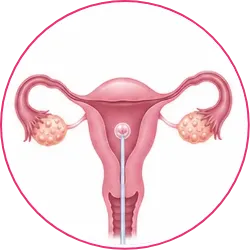


IVF, or in vitro fertilisation, is the best-known and most widely used method of assisted reproduction. It helps couples who are unable to conceive naturally – whether due to problems with ovulation, sperm, fallopian tubes or for no apparent reason.
During IVF, the woman's eggs are fertilised outside the body in a special culture medium. The developing embryo is then transferred back into the uterus, where natural development can continue.
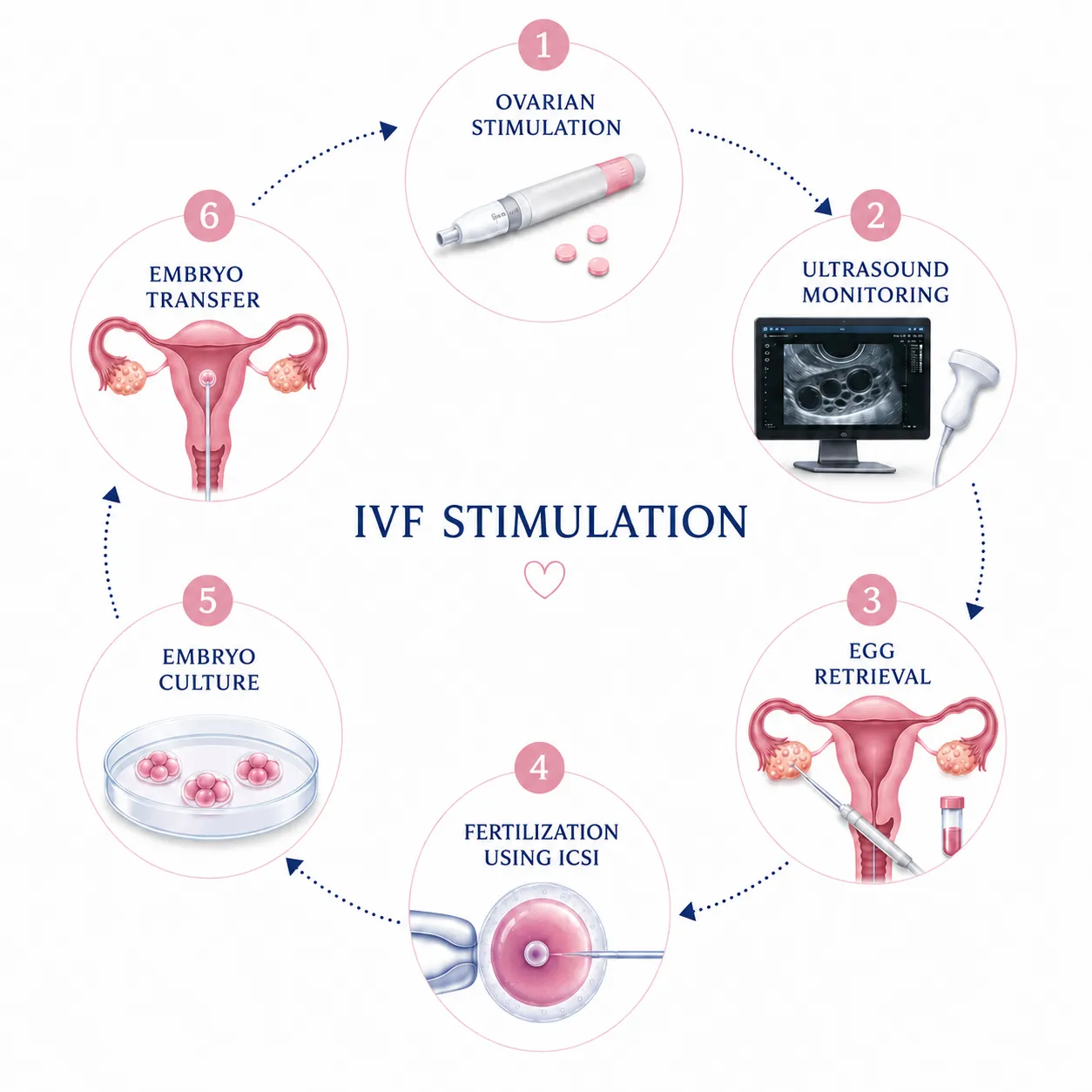
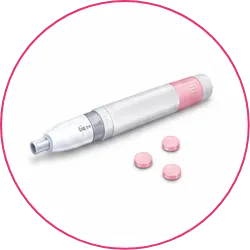
In order to retrieve several eggs at once, the woman undergoes short-term hormonal stimulation (lasting approximately 10 days). Its aim is to support the growth of multiple follicles in the ovaries – each of which may contain one egg.
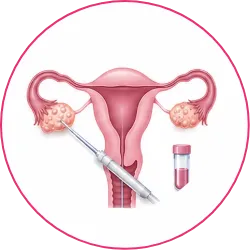
Once the follicles are large enough, the doctor performs a gentle egg retrieval procedure – on an outpatient basis and under short-term anaesthesia. The retrieved eggs are immediately transferred to the embryology laboratory.
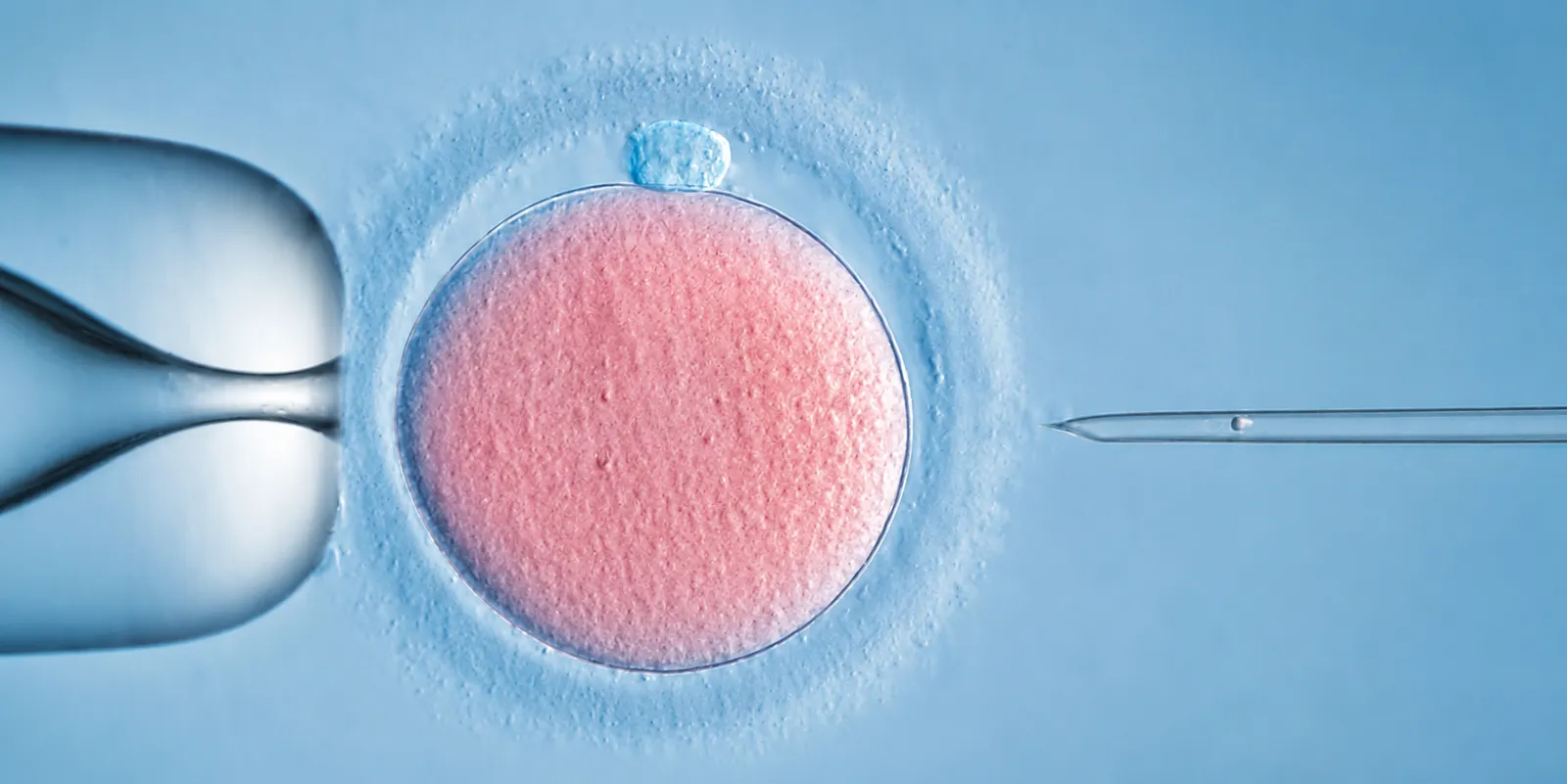
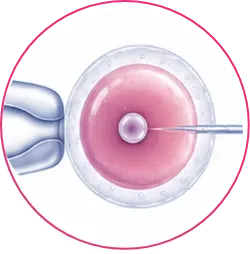
The eggs are fertilised using the ICSI method (intracytoplasmic sperm injection), in which the embryologist injects one carefully selected sperm directly into the egg.
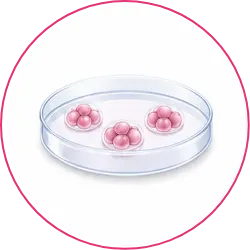
The resulting embryos are cultured under laboratory conditions until the fifth or sixth day, i.e. to the blastocyst stage. This process makes it possible to select embryos with the highest chance of successful implantation.
If there is a higher number of blastocysts, assisted hatching may be recommended. This improves embryo protection during freezing and may increase the success rate after thawing during a subsequent cryoembryo transfer (KET/FET).
The selected embryo is transferred into the uterus on the fifth day of culture, in a procedure known as embryo transfer.
If more high-quality embryos are available, they can be frozen using vitrification. Embryos preserved in this way can be used in the future for cryoembryo transfer (KET/FET).
Minimal stimulation IVF is a type of assisted reproduction in which low doses of hormones are used to stimulate the ovaries. This gentle approach is often well tolerated, but it is important to expect a lower number of retrieved eggs.
It is ideal for women with lower ovarian reserve, where strong hormonal stimulation is not effective.
Women with lower ovarian reserve
Women who want to minimise the hormonal burden
Lower hormonal burden on the body
Fewer side effects and complications
Possibility of repetition with less strain
In women with a normal response, a lower number of eggs is usually retrieved, which may lead to a lower success rate.
Natural cycle IVF is a gentle method of assisted reproduction that uses the woman's natural cycle – without the use of stimulation medication.
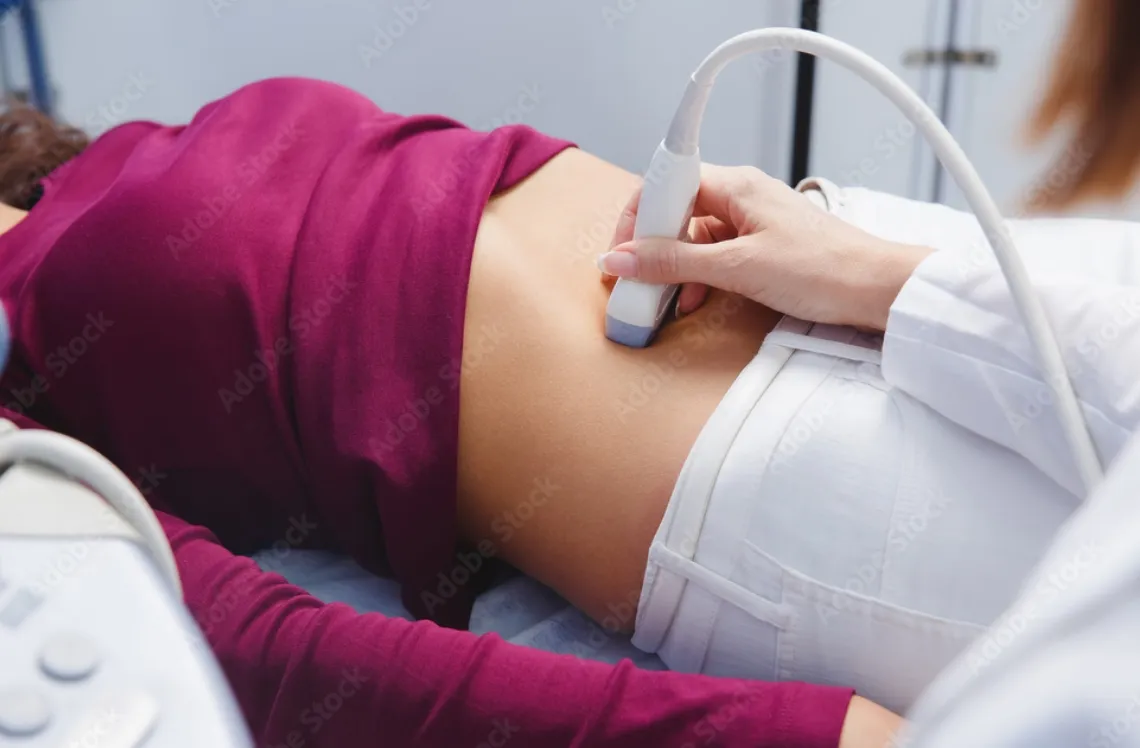
During the natural cycle, we use ultrasound to monitor how the follicle grows, in which the egg matures. Once the follicle is large enough, the doctor retrieves the egg.
In the laboratory, it is then fertilised using the ICSI method – under a microscope, a selected sperm is injected into the egg.
The entire process takes place without stimulation, within the woman's natural cycle.
Natural cycle IVF takes place naturally, without hormonal stimulation. This means that usually only one egg is retrieved, which may affect the success rate of treatment.
The egg retrieval procedure in standard IVF and minimal stimulation is performed under short-term anaesthesia. The rest of the process is outpatient-based and usually without significant physical discomfort.
The aim of stimulation is to obtain approximately 8–15 mature eggs, but the number may vary depending on the individual response of the body.
A standard IVF cycle takes approximately 3 weeks from the start of stimulation to embryo transfer.
In most cases, only one embryo is transferred during embryo transfer. This approach – also called single embryo transfer – is recommended in an effort to minimise the risks associated with multiple pregnancy, which may endanger the health of the woman and the developing foetus.
You can find out how IVF treatment at ReproGenesis works
here
Hlinky 144, 603 00 Brno, CZ