Cryoembryo transfer (FET)

Cryoembryo transfer is the transfer of a thawed embryo into the uterine cavity.

Kryoembryotransfer ReproGenesis
Kryoembryotransfer

When is FET performed

It is performed either as the next step after an unsuccessful fresh embryo transfer, or as a planned strategy – for example, transfer after genetic testing of embryos, after an IVF cycle without a fresh transfer, or when planning another pregnancy after childbirth.

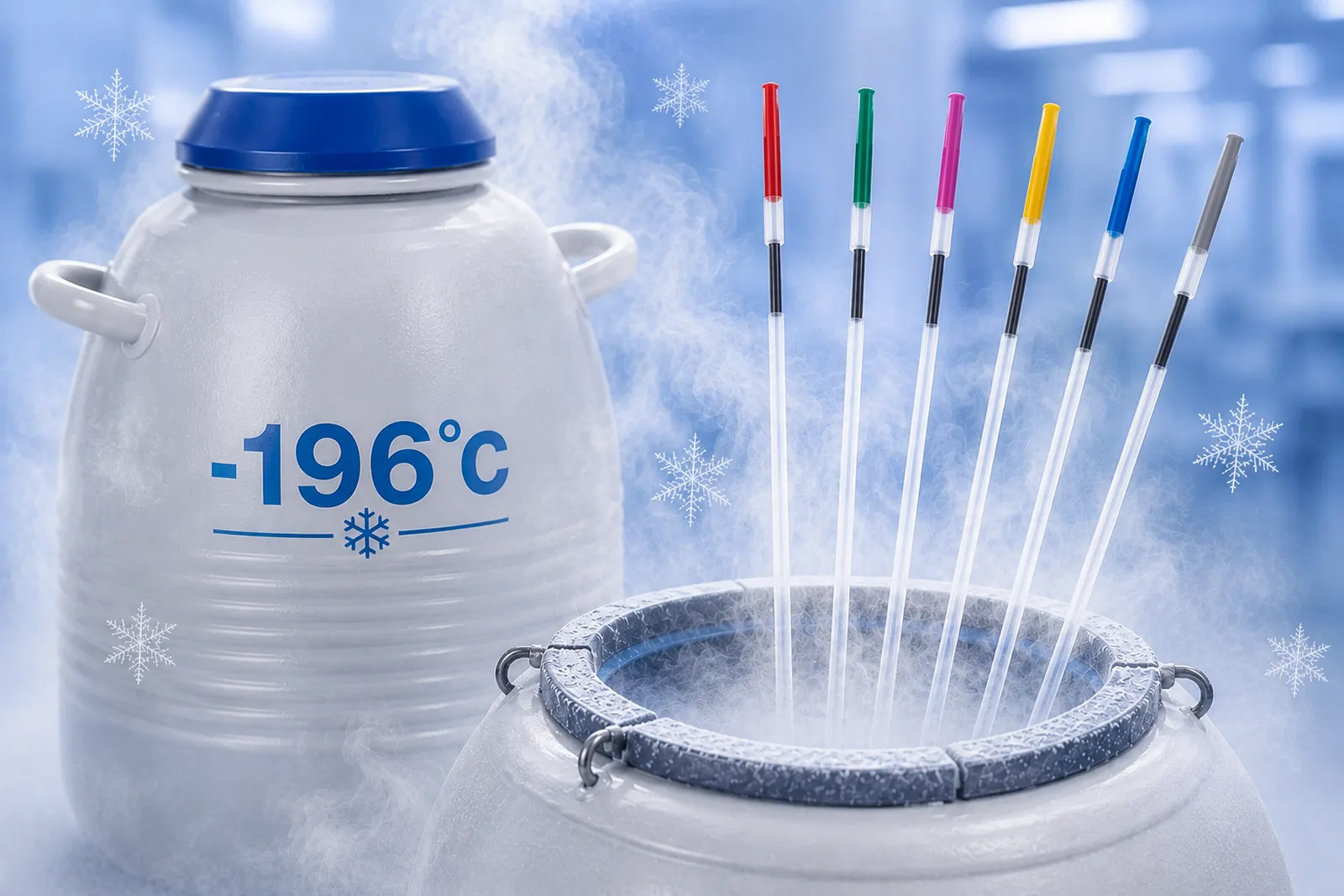
Freezing embryos using the vitrification method ensures their high quality after thawing, as well as safe long-term storage.

Scroll down

Benefits of frozen embryos and FET

Simpler process – repeated ovarian stimulation, egg retrieval and general anaesthesia are not required.

Timing option – the transfer takes place in a cycle when the endometrium is optimally prepared.

Flexibility – the uterine lining can be prepared naturally, in a native cycle, or with hormonal support (HRT).

Safety – the procedure is quick, gentle and outpatient-based.

How FET is performed step by step

1.

Cycle planning – Based on the hormonal profile and regularity of the menstrual cycle, the doctor decides whether FET will be performed in a native cycle or after hormonal preparation of the endometrium.

2.

Endometrial preparation – This is followed by ovulation monitoring in a native cycle or administration of oestrogens and progestogens in an HRT cycle.

3.

Embryo thawing – Embryologists thaw the embryo on the day of transfer.

4.

The transfer itself – The doctor transfers the embryo into the uterine cavity using a thin catheter under ultrasound guidance. The procedure takes only a few minutes.

5.

Short rest and going home – After the procedure, the patient rests in the treatment room for a few minutes and can then go home.

6.

Hormonal support – The patient continues taking all medication as recommended by the doctor.

Types of preparation for FET

FET in a native natural cycle

  • Suitable if the woman ovulates
  • Using folliculometry (ultrasound), we determine the day of ovulation
  • The transfer is planned after ovulation has occurred and with progestogen support
  • Advantage: minimum medication, biologically natural timing

FET with hormonal support (HRT cycle)

  • The endometrium is prepared using oestrogens and progestogens (tablets/vaginal capsules)
  • Suitable for irregular cycles, anovulation or precise, controlled timing
  • Medication is taken until the pregnancy test and, after pregnancy is confirmed, usually until the 12th week of pregnancy

How many embryos are transferred?

In line with recommendations and for the safety of the pregnancy, we most commonly transfer 1 embryo.This reduces the risk of multiple pregnancy without reducing the chance of success.

What affects the success of FET

Embryo quality

Condition and readiness of the endometrium (thickness, structure, receptivity)

Woman’s age and overall health factors

As an additional option, the advanced method EmbryoGlue® may be considered.

Checking the result of FET

Around the 14th day after transfer, we recommend a blood hCG test. This is the most accurate way to confirm embryo implantation.

Frequently asked questions (FAQ)

Is FET painful?

The transfer itself is quick and usually painless. You may feel mild pressure, similar to a standard gynaecological examination.

How long can frozen embryos be stored?

Embryos frozen by vitrification can be stored long-term. The storage period is determined mainly by individual and administrative-legal conditions.

What if I have an irregular cycle or do not menstruate at all?

A suitable option is an HRT cycle – we prepare the endometrium with medication and time the transfer precisely.

Do I need to rest after FET?

A calmer routine is recommended on the day of the procedure; normal activities can usually be resumed soon. Intensive physical exertion, sport, swimming or bathing should be postponed.

Can I travel immediately after FET?

Yes, after embryo transfer you can travel without concern, including by plane. However, we recommend avoiding overheating and unnecessary stress.

Does the success rate of FET differ from the fresh embryo transfer?

Thanks to vitrification and careful preparation of the endometrium, FET is comparably successful.

Decorative graphic
Donation coordinator

Mgr. Hana Ströer

IVF Coordinator

Hlinky 144, 603 00 Brno, CZ

Do you need more information?
Contact us!

Potřebujete více informací?
Ozvěte se nám!