
The endometrium is the inner lining of the uterus, where the embryo implants after fertilisation. Its proper structure, bacterial balance and ability to accept the embryo are essential for a successful pregnancy.
During the menstrual cycle, the endometrium changes naturally – it grows, matures and prepares for possible embryo implantation.

Receptivity refers to the ability of the uterine lining to accept the embryo and allow it to implant. This ability is time-limited and occurs during the so-called implantation window (WOI – Window of Implantation), which usually appears between days 18 and 21 of the menstrual cycle. In some women, however, the implantation window may be shifted in time.
In addition to the correct timing of the transfer, bacterial balance in the uterine lining also plays an important role. If this balance is disrupted, it may negatively affect the implantation process and lead to failure even when a good-quality embryo is transferred.

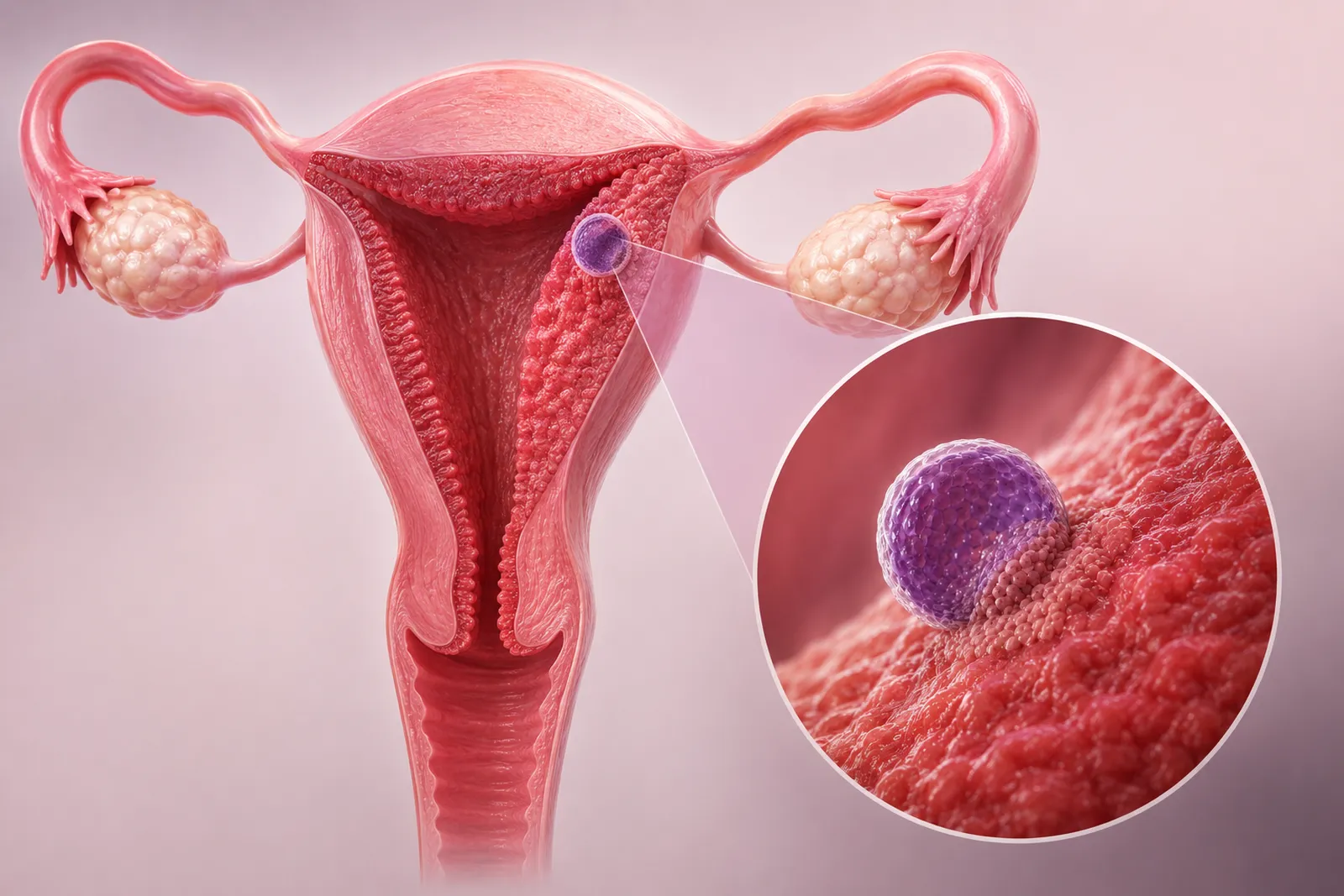
This test determines when the uterine lining is receptive, meaning ready to accept the embryo.
It analyses the activity of genes in the uterine lining that influence embryo implantation and can therefore precisely determine the period when embryo transfer has the highest chance of success.
The test analyses the microbial composition of the uterine lining, focusing on the presence of lactobacilli and pathogenic bacteria. If performed together with an endometrial receptivity test, it provides comprehensive information about the readiness of the endometrium for embryo implantation as well as the bacterial colonisation of the uterus.
Based on these results, the doctor may indicate targeted treatment with antibiotics or probiotics and precisely time the embryo transfer, which increases the probability of successful implantation.
The tests are recommended especially in cases of:

Consultation with a doctor – assessment of whether the test is suitable
Endometrial biopsy – sample collection in the second phase of the cycle
Laboratory analysis – sending the sample to a specialised laboratory
Evaluation of results – recommendation of the next treatment steps
ora™ is a non-invasive test that determines the implantation window without the need for a uterine biopsy. The sample is taken from blood only.
Preparation cycle – The doctor plans a cycle that simulates preparation for embryo transfer (hormonal or natural).
Blood sample collection – Blood is collected on days 4 and 5 after starting progesterone administration (in an HRT cycle), or on days 6 and 7 of a natural cycle after the LH surge or hCG administration. In some cases, only one blood sample is collected (on day 5).
Sample analysis – The blood sample is sent to a laboratory for analysis.
Report for the doctor – The doctor receives the result with the recommended timing of embryo transfer.
A molecular genetic test that evaluates the activity of genes in the uterine lining and its readiness for embryo implantation. Endometrial receptivity can be assessed using ERA or BeREADY tests.
It is a set of tests that evaluate the microbiome of the uterine lining and detect the presence of pathogenic bacteria.
ora™ is a non-invasive endometrial receptivity test performed from blood. The examination is carried out without the need for a uterine lining biopsy.
For women with repeated unsuccessful embryo transfers or recurrent miscarriages.
The procedure may be uncomfortable, but most patients tolerate it well.
We usually receive the results within 3–4 weeks.
The test is not covered by health insurance. We will be happy to provide the exact price and payment options during a consultation.


Hlinky 144, 603 00 Brno, CZ

Hlinky 144, 603 00 Brno, CZ