
Hysteroscopy is a modern, minimally invasive gynaecological examination that allows a detailed inspection of the uterine cavity using a thin optical instrument – a hysteroscope. It is most often used in the diagnosis of infertility, repeated unsuccessful IVF cycles, irregular bleeding or other gynaecological problems.
Thanks to the precise imaging of the uterine cavity, hysteroscopy can help reveal the cause of problems with conceiving, and some findings can also be treated during the same procedure.

The advantage of hysteroscopy is a fast, precise and gentle examination with the possibility of treating certain findings immediately.
A doctor may recommend hysteroscopy, for example, in cases of:
Difficulty conceiving
Recurrent miscarriage
Repeatedly unsuccessful IVF cycles
Suspected polyps or adhesions in the uterus
Irregular or heavy menstrual bleeding
Changes found during an ultrasound examination
Hysteroscopy is an important part of modern diagnostics in gynaecology and reproductive medicine.
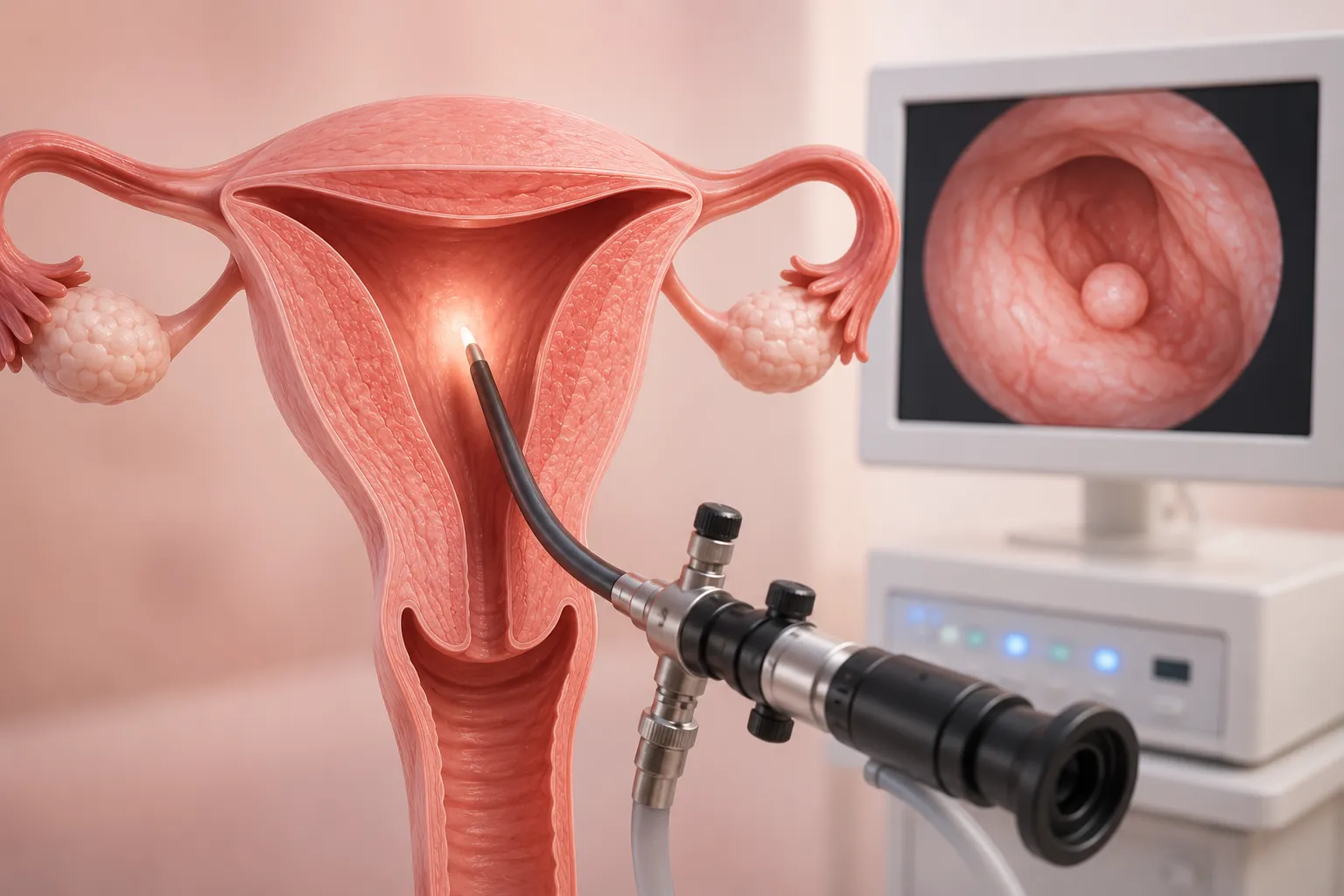
The procedure is performed under short general anaesthesia and usually takes approximately 10–20 minutes.
During the procedure, the hysteroscope is introduced through the vagina and cervix into the uterine cavity. For better visibility, the uterine cavity is filled with a clear fluid, which allows a detailed view of the lining and any changes.
The collected tissue is sent for histopathological examination.
Your doctor will discuss the results of the examination and the recommended next steps with you.

Hysteroscopy can significantly help identify the causes of infertility and increase the chance of successful conception. Thanks to a detailed examination of the uterine cavity, even minor changes can be revealed that may not be visible on a standard ultrasound examination.
At our clinic, we perform hysteroscopy as part of comprehensive infertility treatment, with an emphasis on a gentle approach, modern diagnostics and maximum comfort for the patient.
If hysteroscopy has been recommended to you, or you are dealing with problems conceiving, we will be happy to help you as part of comprehensive reproductive care at our clinic.
Examination fee 600 EUR



Hlinky 144, 603 00 Brno, CZ

Hlinky 144, 603 00 Brno, CZ