The success rate of treatment using a woman's own eggs is naturally linked to her age. As age increases, both the number and quality of eggs decline, which affects the likelihood of achieving a pregnancy.
| Patient's age | Clinical pregnancy after ET | Clinical pregnancy after FET |
|---|---|---|
| up to 35 years | 53 % | 64 % |
| 35–39 years | 35 % | 38 % |
| 40–45 years | 21 % | 27 % |
Results for frozen embryo transfer (FET) also include transfers of embryos following preimplantation genetic testing (PGT-A).
PGT-A makes it possible to select embryos with a normal number of chromosomes, which have a higher likelihood of successful implantation and the development of a healthy pregnancy. This approach is used mainly in women of advanced reproductive age.
That is why the results of FET in women over 35 may be higher than the results of a fresh embryo transfer. The higher success rate therefore does not only reflect the difference between a fresh and a thawed embryo, but also the benefit of genetic testing in embryo selection.
The egg donation programme is one of the most successful methods of infertility treatment. Thanks to careful donor selection, modern laboratory procedures and individual preparation of recipients, we achieve high success rates across all age groups.
| Recipient's age | Clinical pregnancy after ET | Clinical pregnancy after FET |
|---|---|---|
| up to 40 years | 60 % | 58 % |
| 40–44 years | 55 % | 52 % |
| over 45 years | 52 % | 50 % |
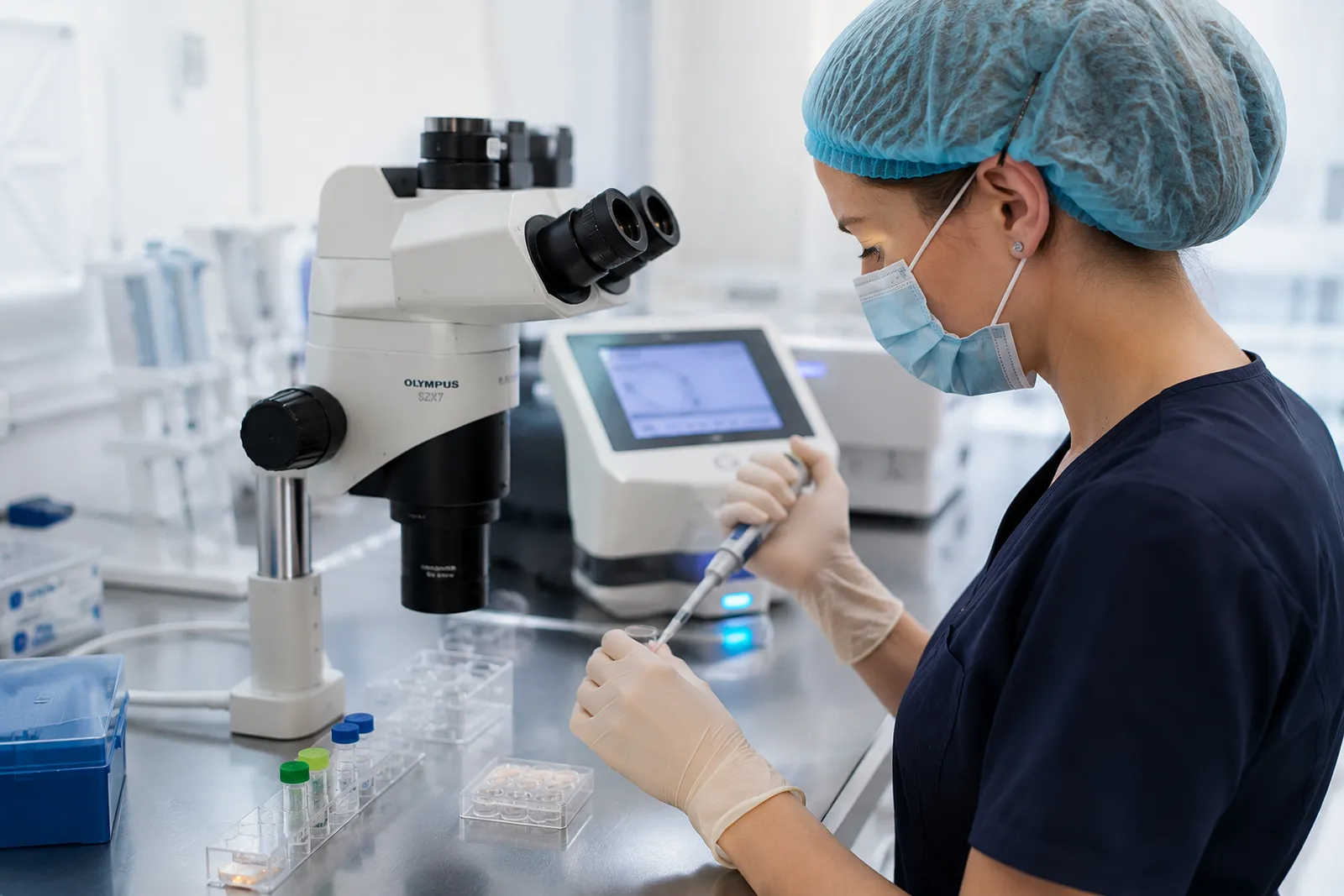
Using the most advanced methods of assisted reproduction, including the ICSI method, we achieve an 85–100% egg fertilisation rate.
We culture embryos to the blastocyst stage (day 5 of development) in modern incubation systems that create optimal conditions for their development.
Every treatment plan is tailored to the couple's health and needs. We place emphasis on correctly set stimulation, precise laboratory work and ongoing communication with patients throughout the entire treatment.
Hlinky 144, 603 00 Brno, CZ